N1 TV: Seventy kilograms - that's how much food every Croatian citizen throws away every year
We throw away meat, fruit and vegetables the most, and that's because we buy more than we need, so the food goes to waste.
Since the corona crisis, when there was also a problem in the food supply, this problem has been talked about more, but also more action has been taken. Some honestly admitted to N1 TV that they often have excess food after a meal.
"I never know the right measure, I always make more, and no one eats it for dinner, so it ends up in the end... Honestly, there is always an excess," said Dajana from Zagreb for N1 television. "Everyone throws away, everyone throws away food, I throw away too first. Something remains in the fridge. We misjudge, we take more and then you have what's left", Petra is also honest. Mirjana from Zagreb is more careful when preparing meals. "No, I don't throw away, I prepare as much as I need for that day. Here, one fish for today. One potato, some Swiss chard, one fish and that's it," Mirjana told us. Most food is wasted in households. Each Croat annually throws away 70 kilograms of food.
Compared to the European average, where it is around 130 kilograms, we are not bad. But there is room for improvement. A common problem is that we buy or order more than we can eat. In addition to households, the problem of food waste also exists in restaurants. Improperly estimated meals and leftovers on the plate often end up uneaten. Although efforts are being made to reduce food waste in restaurants, this problem still exists. "There is always that, I call it, the problem of hungry eyes, everyone wants to have a lot of it, and in the end people can't eat it. The only thing we throw away in our processing are shells, bones, some things that we cannot fully use even though we also cook stocks and soups, which cannot be used for food. And the most waste is created from the leftovers on the plate that the guest does not eat himself", says the owner of a restaurant, Marin Medak.
We buy more than we need, store food in refrigerators or shelves, so it often happens that it expires before we use it. The Ministry of Agriculture points out to N1 that it is aware of this problem and is working to raise citizens' awareness of it, especially among children. It is also planned to support so-called "food banks" that would store food safely and distribute it where needed.
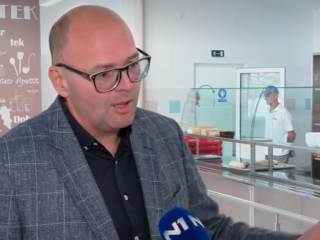
There are four public kitchens in Zagreb (owner City of Zagreb), where 1,850 meals are distributed daily. Food is provided by the City of Zagreb, but donations are always welcome." This is how the director of the Institution DOBRI DOM City of Zagreb, Alen Župan, thinks. "We make sure that nothing goes to waste in our production system, we optimize production, quantity, to reduce that waste, and what comes, we redistribute in a timely manner to our fellow citizens who are users of the service, he says. Therefore, all the food that arrives is distributed where it is needed. The goal is that nothing goes to waste or gets thrown away. "
This is also the national goal, to reduce food waste in Croatia by 30 percent by 2028.
Image gallery