

Educational event on the new European package of measures to combat poverty!
At the invitation of the National Foundation for Civil Society Development and E.S.I.F. Adult Education Institution, DOBRI DOM attended an educational event entitled “European Package for Combating Poverty – Presentation of the New Package of Measures.”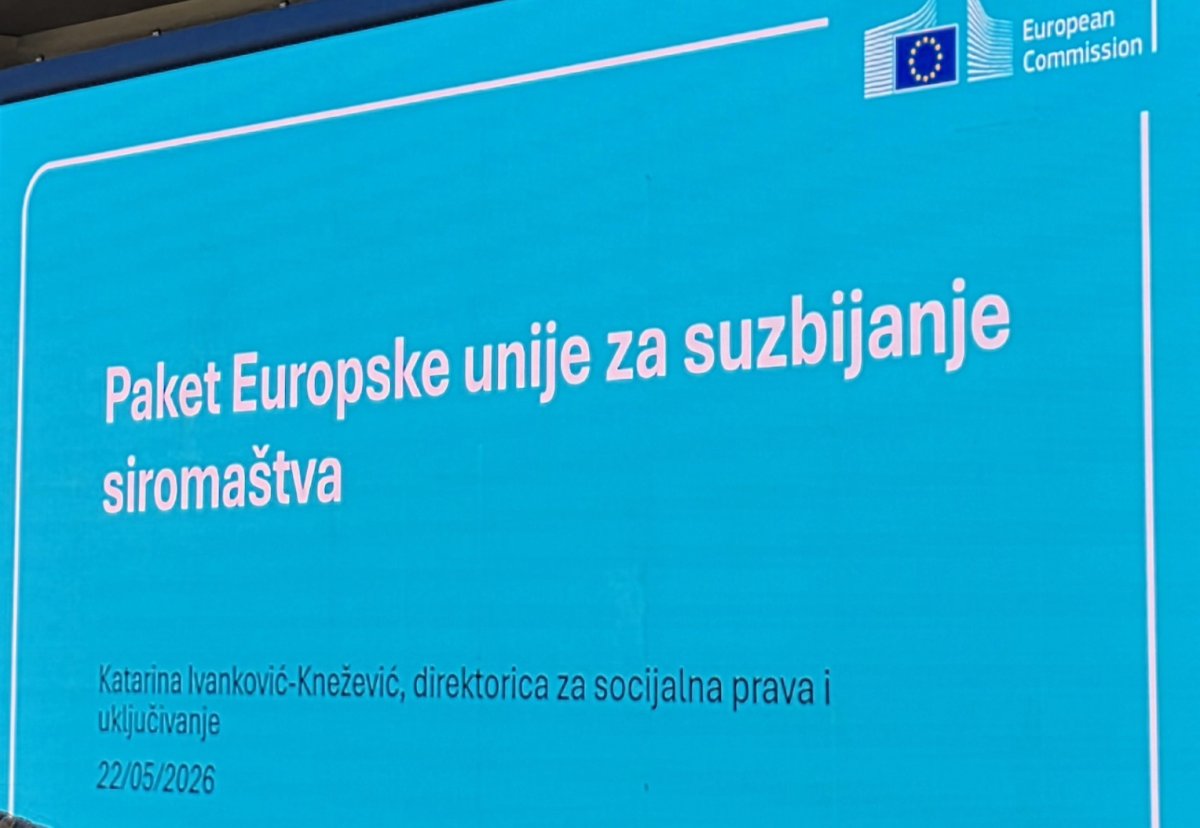
At the invitation of the National Foundation for Civil Society Development and E.S.I.F. Adult Education Institution, DOBRI DOM attended an educational event entitled “European Package for Combating Poverty – Presentation of the New Package of Measures.” The event was also attended by Suzana Rožić, Head of the Social Welfare Department of Dobri dom.
The aim of the event was to provide participants with relevant and up-to-date knowledge about European policies aimed at
reducing poverty and social exclusion, with a special emphasis on current legislative and strategic
initiatives of the European Union.
As part of the event, a lecture was held on the topic of the European package for combating poverty, with a
presentation of its key elements, objectives and implications for Member States, as well as the role of the European
Social Fund + in its implementation, which was held by Ms. Katarina Ivanković Knežević, Director for
Social Rights and Inclusion at the European Commission. The event is particularly important because on 6 May 2026, the European Commission adopted the first European Union Anti-Poverty Strategy, setting a comprehensive framework for strengthening social Europe and eradicating poverty in the long term. The strategy aims to reduce the number of people at risk of poverty and social exclusion by at least 15 million by 2030, with the ultimate goal of contributing to the eradication of poverty by 2050. The European Economic and Social Committee (EESC) also supported the European Commission's social package and the first EU Anti-Poverty Strategy. According to available data, in 2025, almost 21% of the European Union's population was at risk of poverty or social exclusion, which further confirms the need to strengthen European and national social inclusion measures. The EESC recommendations specifically highlight that child poverty and intergenerational poverty must be at the heart of future measures, that at least 5% of the European Social Fund Plus (ESF+) should be directed towards projects to combat child poverty, and that the implementation of the Affordable Housing Plan, within the framework of the EU Anti-Poverty Strategy, is crucial for strengthening social inclusion and citizens' security. The organisers concluded that such professional events play an important role in strengthening the capacities of institutions and organisations involved in the implementation of social policies and contribute to the creation of better and more efficient models of support for citizens. It was highlighted that the implementation of new European measures will require strong cooperation between national institutions, civil society organisations and all relevant stakeholders in order to ensure social inclusion and a dignified life for all citizens.